10 Apr 2026
Which tracks for my M4 Sherman model kit.
M4 Sherman tank is one of the moust iconic tanks of WWII, so nearly every scale modeler needs to make at least one in their career. Since there were a lot of types of tracks for M4 Sherman tank it might be very confusing which one to chose on our model.
Here is a little guide.
M4 Sherman Track Types by Variant
M4 (welded hull)
- Early (1942–43):
- Mid (1943–44):
- Late:
- T54E1/E2 (all-steel, less common)
Often seen with duckbill extensions in Europe
M4A1 (cast hull)
- Early:
- T41
- Mid (very common setup):
- T51
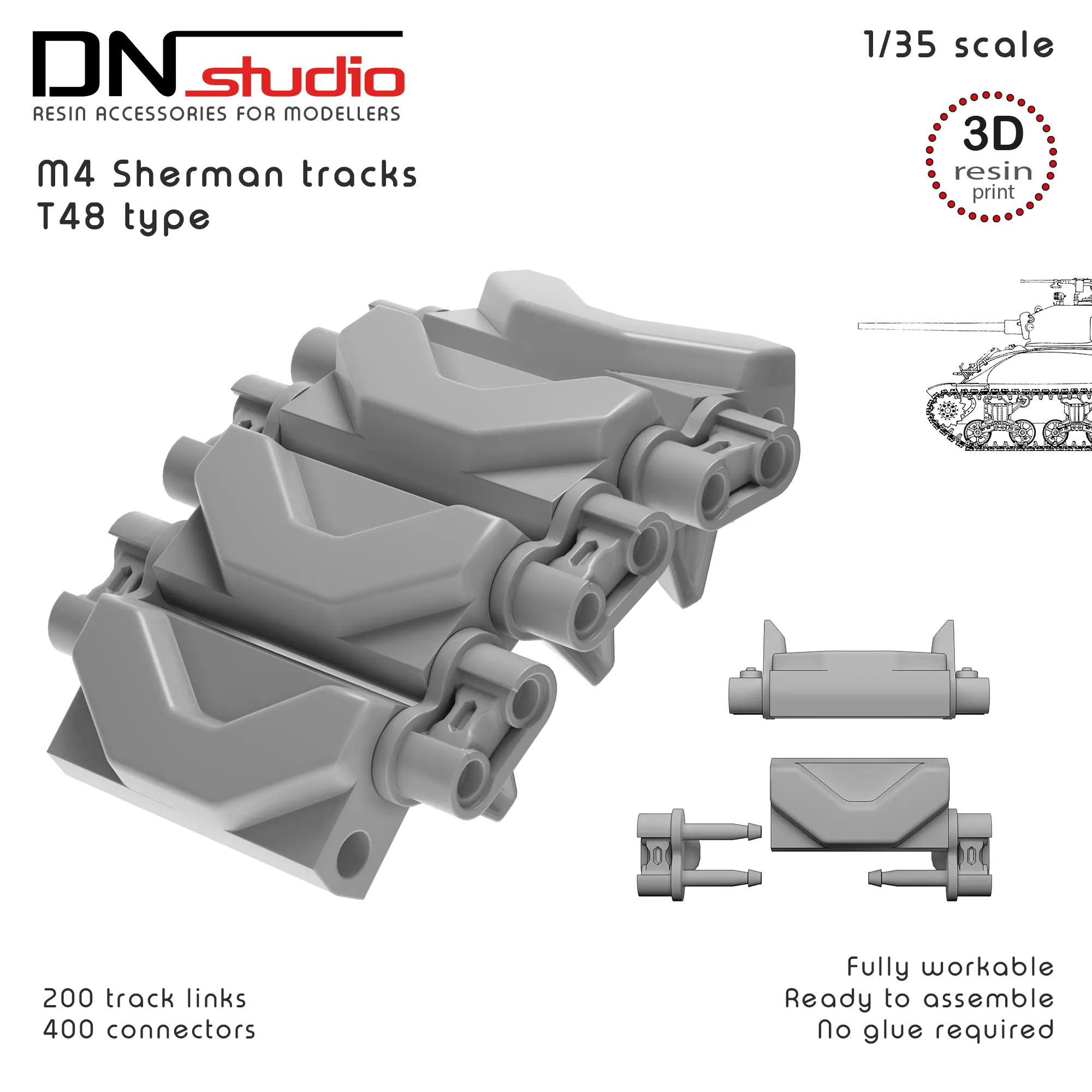
- T48
- Late:
- T54E1/E2 occasionally
This is one of the most commonly photographed Sherman types with T51 chevron tracks
M4A2 (diesel, used by Allies like USSR & UK)
- Early–mid:
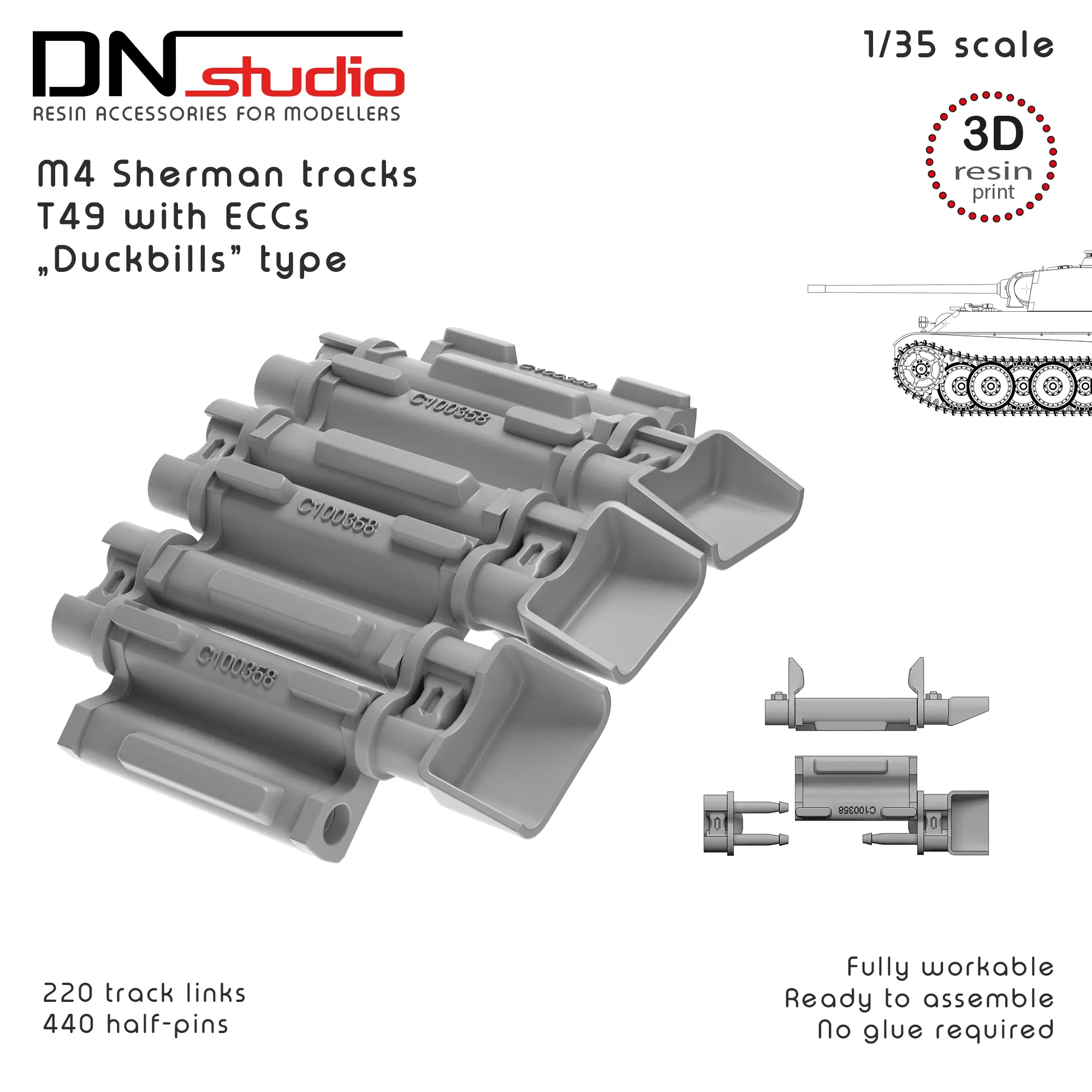
- T49 (popular in Soviet service for mud)
- T51
- Mid–late:
- T48
- Late:
- T54E1/E2 (especially in harsh conditions)
Soviets often preferred all-steel or aggressive tracks due to terrain
M4A3 (Ford GAA engine – main US Army late-war tank)
- Early:
- T51
- Mid–late:
- T48
- T54E1/E2
Very common to see duckbills + T48/T51 in NW Europe. If you want to understand how duckbills affect Sherman tracks, read our guide on duckbills on Sherman tank tracks.
M4A4 (long hull, mostly British use)
- Typical tracks:
- T48 very common
- T51
- Less common:
- T49 early on
British Shermans (Sherman V) frequently used T48 with duckbills
HVSS Shermans (Wide-track variants)
These are a separate category because they used different suspension and wider tracks:
M4A3E8 Sherman
Late M4A3 (76mm HVSS)
- Tracks:
- T66 (steel)
- T80 (steel chevron) most iconic
- T84 (rubber chevron, less common)
These wide tracks dramatically improved mobility
Quick Reference Table
| Sherman Variant | Most Common Tracks |
|---|---|
| M4 | T41, T49 → T51, T48 |
| M4A1 | T41 → T51, T48 |
| M4A2 | T49, T51 → T48, T54E1/E2 |
| M4A3 | T51 → T48, T54E1/E2 |
| M4A4 | T48, T51 |
| M4A3E8 (HVSS) | T66, T80 |